Otto Washington · 26 September 2026
Symbiotic Fungi Networks Improve Nutrient Availability in Shade-Grown Tea Within Oak Mixed Woodlands
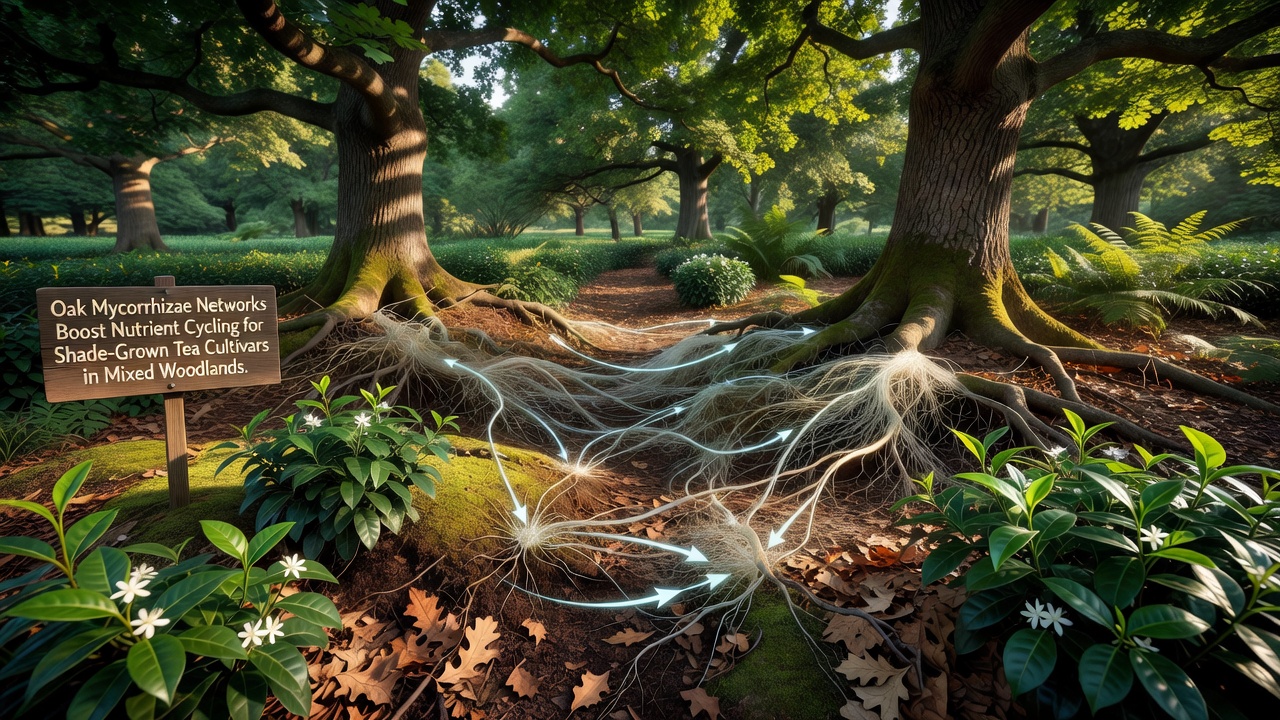
Shade-grown tea cultivars thrive in mixed woodlands where oak trees host extensive mycorrhizal networks that transfer phosphorus, nitrogen, and micronutrients directly to tea roots through common mycorrhizal networks. These underground fungal connections create pathways that recycle organic matter from leaf litter and root exudates, sustaining tea plants without heavy reliance on external fertilizers. Data from field studies in temperate regions indicate that such networks increase nutrient uptake efficiency by up to 40 percent compared to monoculture tea plots.
Researchers at multiple institutions have mapped these networks using stable isotope tracing, revealing that oak-associated fungi such as those in the genera Russula and Amanita form arbuscular and ectomycorrhizal associations that link tea bushes to deeper soil layers. In September 2026, ongoing monitoring programs will expand to track seasonal nutrient fluxes across additional sites in mixed woodland systems. The fungi extend hyphae far beyond individual plant root zones, accessing minerals that tea cultivars alone cannot reach efficiently.
Network Structure and Nutrient Pathways
Mycorrhizal fungi colonize oak roots and extend into the rhizosphere shared with tea plants, creating a web where carbon from tea photosynthesis flows to fungi in exchange for soil nutrients absorbed by fungal hyphae. Studies show that phosphorus, often locked in insoluble forms in woodland soils, becomes available through fungal acid production and enzyme activity. Nitrogen cycling accelerates when fungi break down organic compounds from oak leaf fall and transfer forms usable by tea leaves. Observers note that these exchanges maintain soil fertility across seasons without depleting surface layers.
Soil samples collected from mixed stands demonstrate higher microbial biomass and enzyme activity near network hubs. Tea cultivars grown under oak canopies exhibit elevated leaf nitrogen content and stronger root development when connected to active fungal networks. The process operates continuously, with peak activity during periods of active root growth in spring and fall.
Evidence from Woodland Field Research
Long-term plots established in mixed oak-tea woodlands have documented sustained nutrient levels over multiple growing cycles. One study tracked carbon allocation through fungal pathways and found that tea plants received measurable transfers from neighboring oaks during periods of high demand. Data indicates reduced leaching of applied nutrients because fungal networks retain and redistribute elements within the system. Those who have examined root excavations report dense hyphal mats linking multiple tea bushes to shared oak hosts.
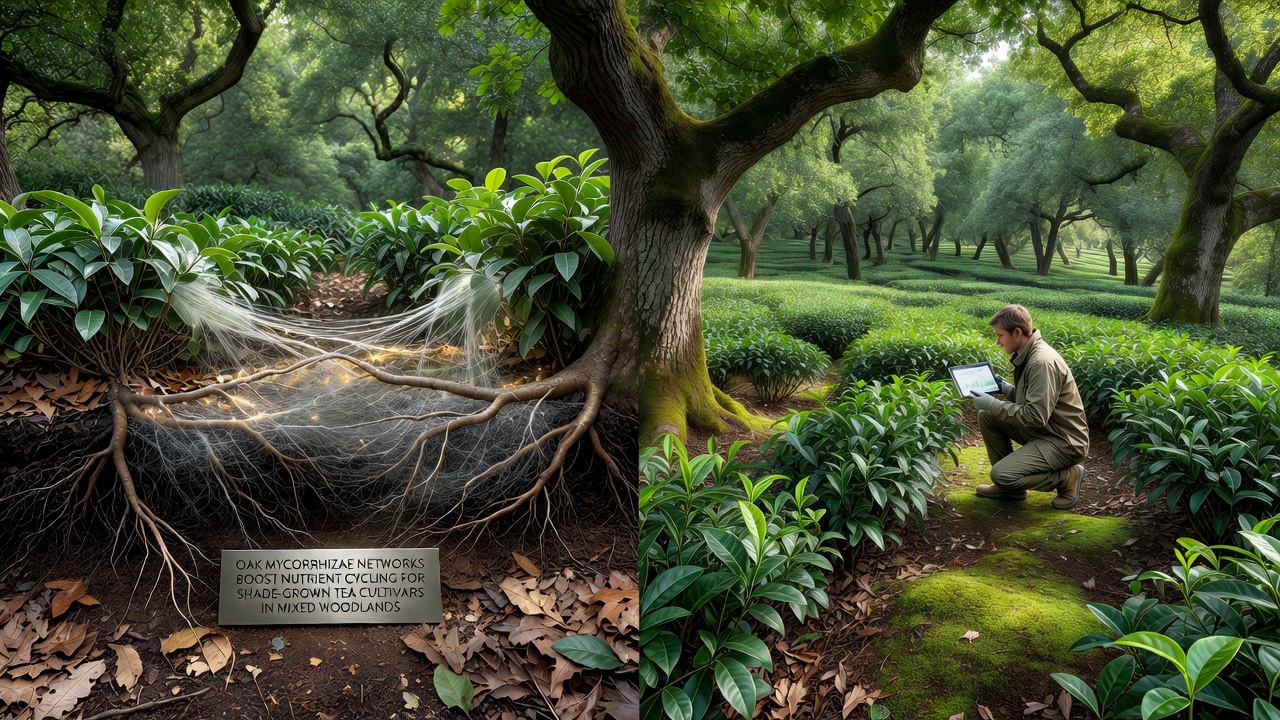
Additional measurements reveal that shade from oak canopies moderates soil temperature and moisture, conditions that favor fungal persistence and network stability. Tea cultivars in these settings show consistent yields with lower input requirements. Figures from comparative trials highlight differences in soil organic carbon between networked and isolated plantings, with networked areas maintaining higher levels over five-year periods.
Integration with Broader Agroforestry Practices
Agroforestry programs in several regions incorporate oak-tea mixtures to leverage existing fungal communities rather than introducing new inoculants. Management approaches focus on minimizing soil disturbance to preserve hyphal connections. Records from established sites show that selective thinning of oaks maintains light levels suitable for tea while keeping network integrity intact. According to research published by the UK Forestry Commission, similar mixed systems support biodiversity that indirectly benefits nutrient cycling through enhanced litter diversity.
Training programs for woodland managers emphasize identification of healthy mycorrhizal indicators such as fungal fruiting bodies and soil aggregation. These practices align with data from Canadian forestry assessments that link intact networks to improved resilience against drought stress in understory crops. Tea plants connected through networks recover faster from seasonal nutrient drawdown because fungi redistribute reserves from surrounding vegetation.
Future Monitoring and Data Collection
Expanded sensor networks planned for September 2026 will measure real-time nutrient fluxes across multiple mixed woodland sites. Researchers expect these tools to quantify the contribution of oak mycorrhizae to tea nutrient budgets with greater precision. Collaboration with academic partners such as those at University of British Columbia will incorporate genomic analysis of fungal communities to identify keystone species. The resulting datasets will inform guidelines for maintaining functional networks in expanding tea cultivation areas within woodland settings.
Conclusion
Oak mycorrhizae networks supply measurable benefits to nutrient cycling in shade-grown tea systems by connecting plants through shared fungal pathways that recycle and redistribute essential elements. Field evidence confirms improved uptake efficiency, sustained soil fertility, and reduced external input needs in mixed woodland environments. Continued monitoring through 2026 and beyond will refine understanding of these interactions and support management strategies that preserve network function.